
Free Webinar, Oct 27Stop your AI agents from writing flaky playwright tests.
Free Webinar, Oct 27Stop your AI agents from writing flaky playwright tests.
TL;DR
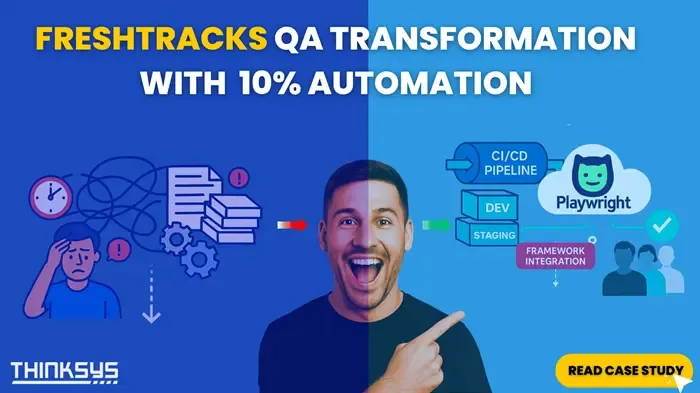
FreshTracks Canada was running 8,000+ manual test cases. Every regression cycle took 2-3 weeks, and earlier automation attempts had already failed. ThinkSys cut the suite down to ~2,000 journey-based cases, built a custom Playwright framework, and automated the riskiest flows first, wired into CI/CD. The suite now catches real bugs (broken exports, bad sorting, confusing error messages) before customers see them. And the team trusts automation again.
At the Glance
Client | FreshTracks Canada: custom Canadian travel experiences for North American travelers. |
|---|---|
Industry | Travel / eCommerce. |
Challenge | 8,000+ manual test cases, 2-3 week regression cycles, previous automation attempts had failed. |
Approach | Test-suite consolidation, custom Playwright framework, risk-first automation, CI/CD integration. |
Headline results | Test suite consolidated 8,000 → ~2,000 cases · critical bugs caught before production · automation running in CI on a risk-first rollout. |
Buried under manual regression? Talk to a Playwright automation specialist.
FreshTracks Canada plans custom Canadian trips for travelers across North America. The trips are analog. Everything behind them isn't; booking, logistics, and customer support all run on software. So a broken export or a mis-sorted search result isn't a cosmetic bug. It's someone who can't book their trip.
FreshTracks' test suite grew the way most do. One case at a time, for years. Then the numbers stopped working:
That last point is the whole story. FreshTracks didn't lack effort, they'd automated before. But automating a bloated suite just gets you bloated automation. It goes flaky, people stop trusting it, and it quietly gets abandoned. That's the cycle ThinkSys came in to break.
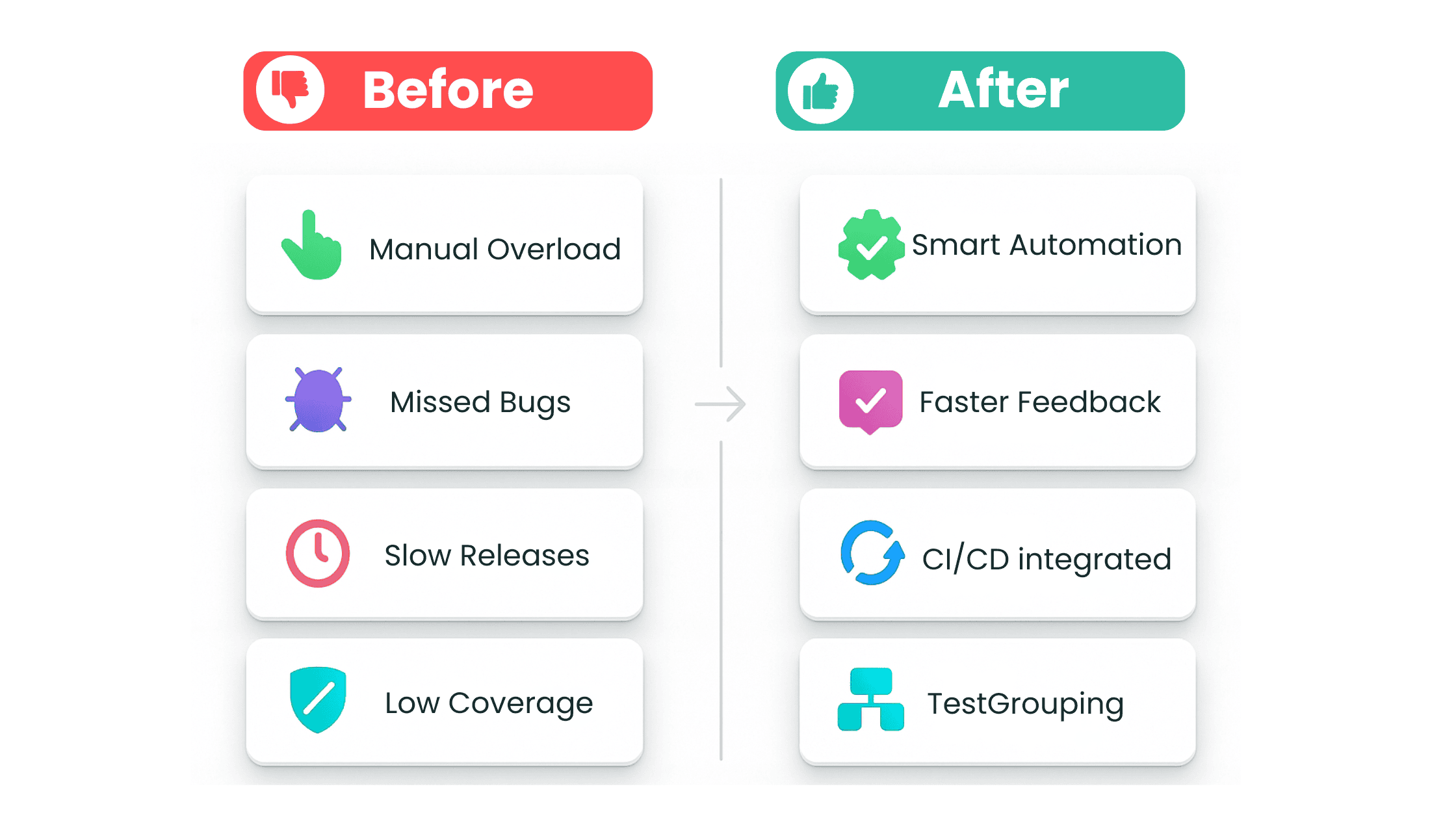
When all the changes were implemented, the difference was evident:
Area | Before | After |
|---|---|---|
Test suite | 8,000+ fragmented manual cases. | ~2,000 consolidated, journey-based cases. |
Regression execution | Entirely manual, 2–3 weeks per cycle. | Highest-risk flows automated in CI; manual effort focused on exploratory testing. |
Automation trust | Previous attempts failed and were abandoned. | Stable Playwright framework the team builds on. |
Production escapes | Critical bugs reaching users. | Broken export feature, incorrect sorting logic, and inconsistent error messaging all caught before release. |
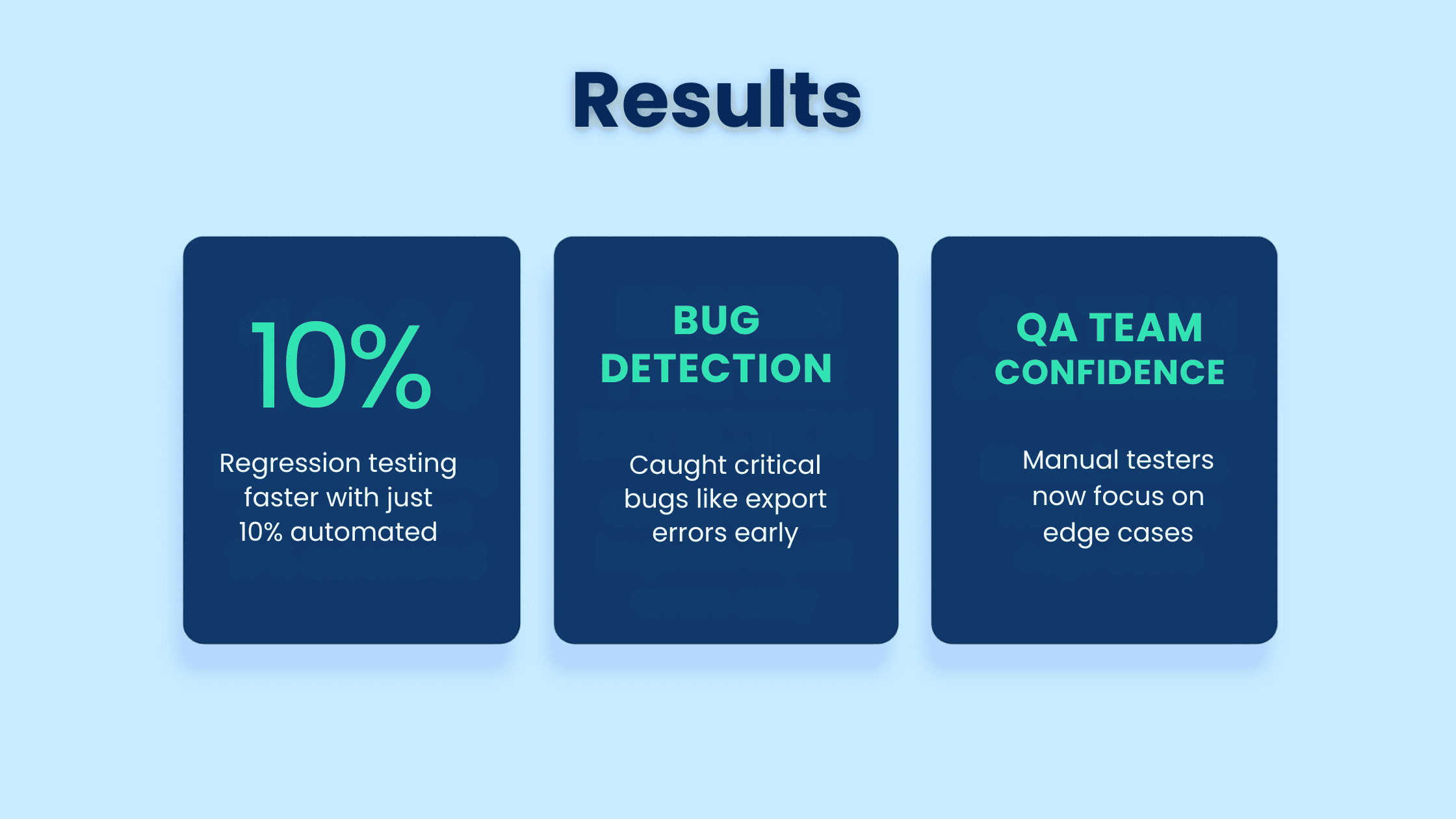
Worth pausing on those three catches. Each one was found by the automated suite before a customer ever saw it. A broken export. A wrong sort order. On a booking platform, that's exactly the kind of bug that used to slip through 8,000 manual cases, and now gets stopped by 200 well-chosen automated ones.
You've probably seen this movie: a company tries automation, it goes flaky, trust evaporates, and everyone drifts back to manual testing muttering "automation doesn't work for us." It's rarely true. Three lessons from this engagement travel well:
This is the same framework-first approach behind our Playwright automation testing services. Still picking a framework? Our Playwright vs Selenium vs Cypress comparison covers when Playwright is the right call, and when it isn't.
FreshTracks didn't need more testing. It needed less; fewer, better test cases, with the riskiest flows automated on a framework built to last. Cutting 8,000 cases to 2,000 and putting critical paths under stable Playwright automation turned a three-week manual bottleneck into a safety net that runs on every code change. Export bugs, sorting bugs, messaging bugs, caught before customers see them. And maybe the part that matters most: a team that had been burned by automation trusts it again.

About the Author
Gaurav Mehta
Experienced Certified Scrum Master and QA Lead with 12+ years of expertise in Agile delivery, software quality assurance, team leadership, and stakeholder management. Guiding cross-functional Scrum teams through planning, execution, and continuous improvement while ensuring the delivery of high-quality software solutions. Passionate about fostering Agile best practices and leveraging Artificial Intelligence in software testing to optimize processes, enhance productivity, and improve software quality.


